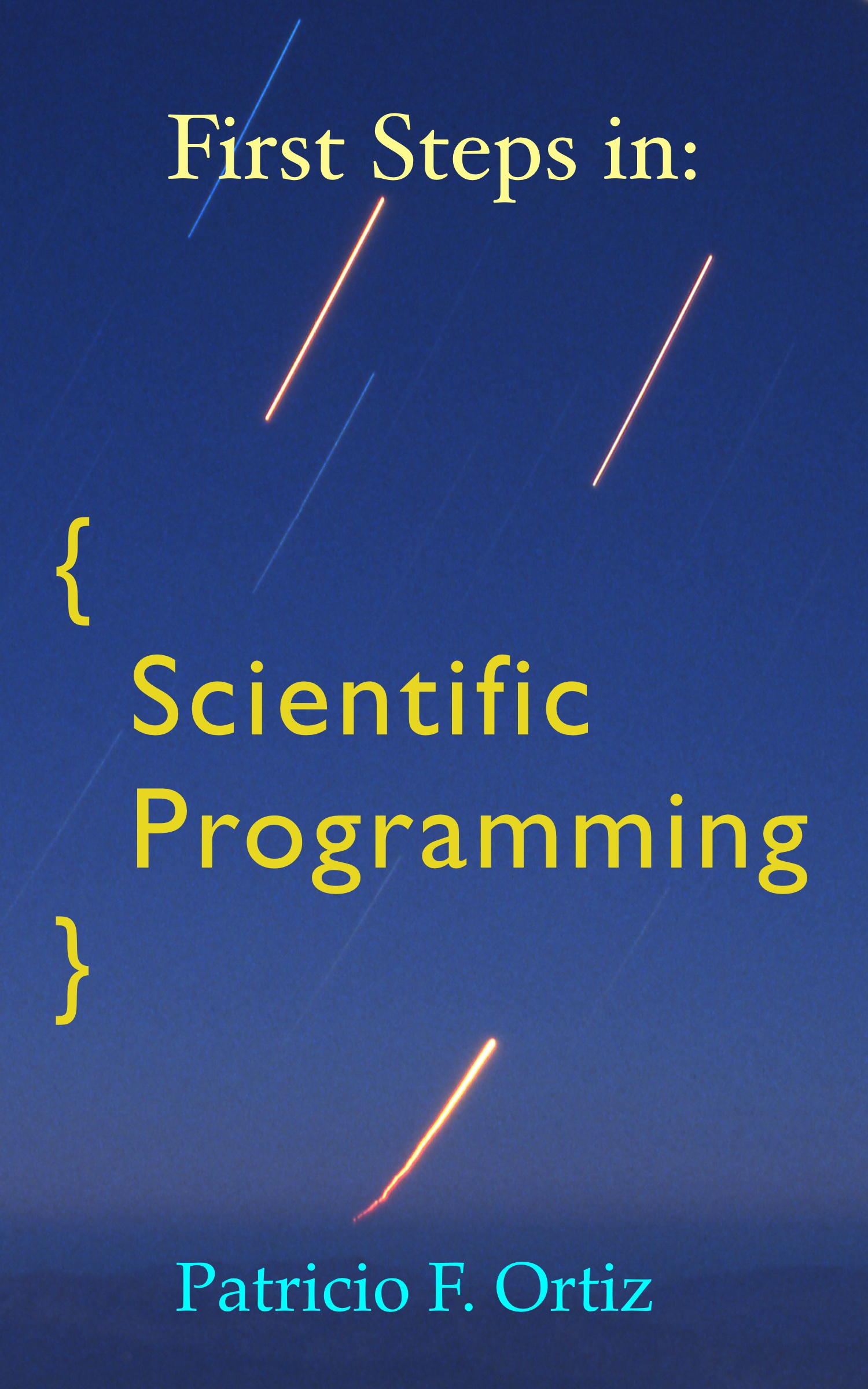
I have just published this book in electronic and print formats (
iBooks
and
Amazon).
This work aims at providing science and engineering students/post-docs
a series of concepts found in real-life scientific projects, including
concepts of programming, code testing, internal representation,
rounding errors, tricks of the trade, advice on best practice to
store data for long-term usage as well as a broad introduction to the
Unix environment which they will find when coding for HPC and cloud
computing. I do not focus on any individual language but the elements
common to all of them. I cover the value of designing the code
carefully, planning for future use and scalability, either using
flowcharts or just "generic code". I give an overview of the tools
available to tackle different problems. Sections as diverse as
working with existing code and working with time are covered. This
book is intended to ease the learning curve for those starting, not
for the seasoned scientific programmer.
Click here for a more detailed description including a table of contents.
Patricio F. Ortiz is an RSE based on the
Department
of Automatic Control and Systems Engineering, The University of
Sheffield, mostly involved with the design and implementation of
the architecture for the
Urban Flows Observatory
project. Its objective is to monitor a number of variables in a urban
environment, from whether variables, air pollution to behaviour of
construction materials. Its data can potentially be correlated with data
dealing with human activities and human health issues, and it could involve several disciplines
in the long run. The Urban Flows Observatory is mostly financed by EPSRC
and UKCRIC. Sheffield is one of a handful of cities involved in this
nationwide effort.